Silicon fertilizer is a medium-element fertilizer and is widely used in agricultural production. As a quality, health-care and new multi-functional fertilizer, its functions are recognized by the majority of growers.

Silicon fertilizer is a new type of multi-functional fertilizer with good quality for health care and plant regulation. Its functions are unmatched and unmatched by other chemical fertilizers.
Silicon fertilizer can be used as fertilizer to provide nutrients for crops, and can be used as a soil conditioner to improve the soil. It also has the functions of disease prevention, insect control and poison attenuation. With its outstanding advantages of being non-toxic, tasteless, non-deteriorating, non-leaking, and non-pollution-free, it is hailed by users as "an efficient and high-quality fertilizer for green ecological agriculture".
Silicon fertilizers are generally divided into: water-soluble silicon fertilizers (sodium silicate, potassium silicate, sodium perdisilicate, sodium metasilicate, etc., which are quick-acting fertilizers that work quickly but have a high pH value); citrus-soluble silicon fertilizer (mainly made from mechanical grinding of blast furnace slag, etc., with an alkaline pH value, containing 20% to 30% silicon dioxide and about 30% calcium oxide); biological silicon fertilizer silicate inoculant (belongs to Bacillus bacteria that have the functions of decomposing potassium, phosphorus, and decomposing silicon. It can decompose silicate minerals in the soil and release effective potassium, phosphorus, and silicon); volcanic silicon fertilizer (the most recently discovered and available high-efficiency silicon resource in the world).
1. Silicon is an important nutrient element in plants and is listed by the international soil community as the fourth largest element after nitrogen, phosphorus and potassium;
2. Silicon fertilizer can help increase the photosynthesis and chlorophyll content of crops, straighten stems and leaves, and promote the accumulation of organic matter;
3. Silicon fertilizer can increase the strength of crop stems, improve lodging resistance by more than 85%, make the stems straight, and facilitate dense planting;
4. Silicon fertilizer can improve the resistance of crops to pests and diseases and reduce the occurrence of various pests and diseases. After crops absorb silicon, silicified cells can be formed in the plant body, thickening the cell walls on the surface of leather leaves and increasing the cuticle, forming a strong protective layer that makes it difficult for insects to bite and for pathogens to invade.
5. Silicon fertilizer can enhance the ventilation of crops, prevent root rot and premature aging, and play an important role in preventing and treating rice root rot;
6. Silicon fertilizer can effectively regulate the opening and closing of leaf stomata and inhibit water transpiration, and enhance the crop's resistance to drought, dry and hot wind, cold resistance and low temperature resistance;
7. Silicon fertilizer can enhance the pollen vitality of melon and fruit crops. Applying silicon fertilizer during the flowering period can significantly increase the fruiting rate;
8. Silicon fertilizer can reduce the fixation of phosphate fertilizer in the soil, activate phosphorus in the soil and promote the absorption of phosphorus by the roots, and improve the utilization rate of phosphate fertilizer. It strengthens the absorption and utilization of calcium and magnesium, and can well regulate the balanced absorption of different nutrients such as nitrogen, phosphorus and potassium by crops. It is called "plant regulating fertilizer";
9. Silicon fertilizer is a health-care fertilizer that can activate beneficial microorganisms, improve soil, correct soil acidity, increase soil salt base, promote the decomposition of organic fertilizers, inhibit soil pathogens, resist heavy cropping and reduce heavy metal pollution;
10. Silicon fertilizer is a high-quality fertilizer that can significantly improve the quality of agricultural products, effectively prevent strong fruits, shrunken fruits and deformed fruits, and increase the hardness of fruits. The fruit has a correct shape, good coloring, good taste, good marketability, good luck resistance, and extended shelf life.
(1) Application in vegetables
The use of silicon fertilizer for vegetables can effectively alleviate obstacles to repeated cropping, regulate soil acidification and hardening, and play a very good role in regulating red hair, green moss, surface alkali plowing (infiltration), heavy metal pollution, etc. Effectively reduce the damage caused by piercing-sucking mouthparts pests such as aphids, mites, red and white spiders, whiteflies, and thrips.
(2) Application effect of silicon fertilizer on strawberries
After spraying silicon fertilizer on strawberries, the strawberry fruits can be enlarged and the appearance will be bright red, round and shiny. Increase the fruit setting rate of strawberry; improve the quality; advance the harvest period; increase the economic value; increase the yield rate; and can greatly improve the strawberry's resistance to various diseases and insect pests. According to experiments, after silicon fertilizer is applied to strawberries, the incidence of aphids decreases by 75%, and the gray mold resistance rate reaches more than 40%. It also has certain resistance to powdery mildew, viral diseases and other diseases, and is an indispensable elemental fertilizer to increase quality and yield during the growth of strawberries.
(3) Application effect of silicon fertilizer on rice
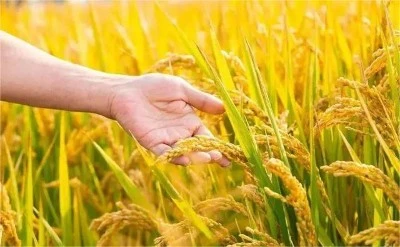
Rice is a silicon-loving crop, and the application of silicon fertilizer has a very significant yield-increasing effect. Spraying silicon fertilizer can thicken the epidermal cells of rice, make the stems and leaves of the crop thick and straight, develop the root system, push up the leaves, and enhance photosynthesis. Promote effective tillering of rice; high seed setting rate; large ears and more grains; drought and lodging resistance increased by more than 85%; promote early maturity; improve rice quality. Enhance the ability to resist pests and diseases (can reduce the incidence rate by 75%, especially against rice blast, rice smut, sheath blight, leaf spot, stem rot, white leaf disease, root rot, etc.). Rice resistance has been significantly enhanced: the incidence of insect pests such as rice planthoppers, stem borers, borers, and aphids has been significantly reduced. Silicon fertilizer is an indispensable elemental fertilizer for improving the quality and yield of rice.